September 11, 2026
IT Helpdesk Outsourcing: Services, Support & Key Benefits
Learn how IT helpdesk outsourcing can streamline support, reduce costs, and boost customer satisfaction for growing businesses seeking reliable help desk solutions.


October 23, 2026
Most gaps between IT budgets and actual results come from a handful of recurring blind spots, not random mistakes. Naming these blind spots is the key to closing the gap instead of repeating it.
Picture a 40-person Chicago firm that built its IT budget the same way it always had: last year's numbers, adjusted up a little, signed off in an afternoon. By the third quarter, an emergency server replacement and a rushed software migration have already blown past what finance set aside.
That scenario is common enough to be almost routine, and it points to something worth naming: most budget shortfalls aren't random. They trace back to a handful of recurring blind spots that get overlooked year after year.
Anyone planning IT spending already knows the basics: estimate costs, set priorities, try to anticipate what's coming. Yet even careful planners in Chicago often watch their actual results drift away from the forecast, and the reason is rarely bad luck or fast-moving technology alone. More often, the same hidden issues resurface quietly, budget cycle after budget cycle.
Once you know where these blind spots tend to hide, closing the gap between the plan and the outcome becomes a lot more achievable.

Every IT budget forecast tries to balance needs against available resources, and that balance only holds if the same mistakes aren't quietly repeating underneath it. When they are, the impact compounds: blind spots drain resources in small increments, making each subsequent goal a little harder to reach.
Individually, these blind spots rarely look dramatic: a slightly optimistic estimate here, an overlooked line item there. Stacked together, though, they produce missed targets, wasted spending, and a cycle of re-forecasting that never actually resolves the underlying problem.
Mid-year number adjustments and after-the-fact explanations for missed plans are familiar territory for a lot of teams. The real work is spotting the pattern behind the gaps so they can be addressed directly, rather than re-litigated every budget cycle.
Some issues are easy to catch, like underestimating hardware costs or forgetting software renewals. The more damaging gaps hide in less obvious places, and five of them show up often enough to explain most of the shortfall between plan and reality.
Technology moves fast enough that what feels current this year can be outdated the next. Forecasts that assume systems will last longer than they actually do end up blindsided by upgrade or replacement costs.
Direct expenses like equipment and licenses are easy to spot, which is exactly why indirect costs—training, downtime during rollouts, integration work—slip through and push budgets over their limit.
Skipping technology cost benchmarking means having no real way to tell whether spending is in line with the market. That blind spot alone causes many businesses to either miss available savings or overpay for standard solutions.
Capital expenses are one-time investments; operational costs recur. Blurring the line between capital vs. operational IT spend, and the true cost of running the IT environment gets buried along with it.
As a business grows, shrinks, or changes direction, its IT needs shift right along with it. A budget that doesn't account for new hires, new locations, or new service models quickly falls out of step with reality.
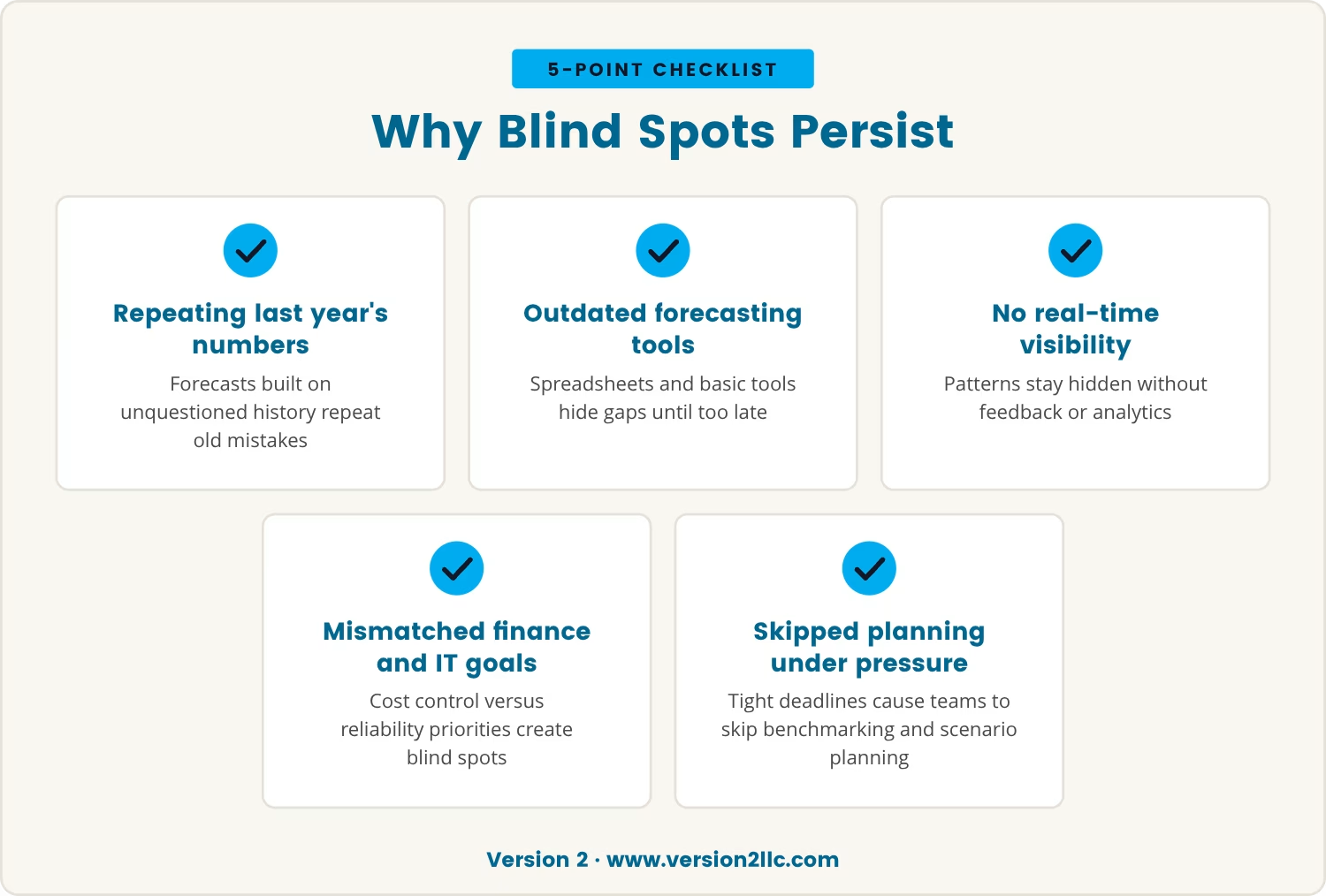
Knowing these issues exist doesn't automatically fix them, since they're often built into how teams plan and communicate in the first place. A forecasting process that leans on last year's numbers without questioning them, for instance, is set up to repeat last year's mistakes.
Compounding that, many teams still rely on spreadsheets or basic forecasting tools that don't surface these gaps on their own. Without real-time feedback or clear analytics, patterns stay invisible until the budget has already broken.
Priorities add another layer of friction: finance teams tend to focus on cost control, while IT leaders lean toward reliability or innovation. When those goals aren't reconciled during the budget process, blind spots slip through the gap between them.
Tight deadlines make it worse. Under pressure to deliver quick answers, teams skip steps like benchmarking or scenario planning, and the hidden risks that step would have caught go unaddressed.
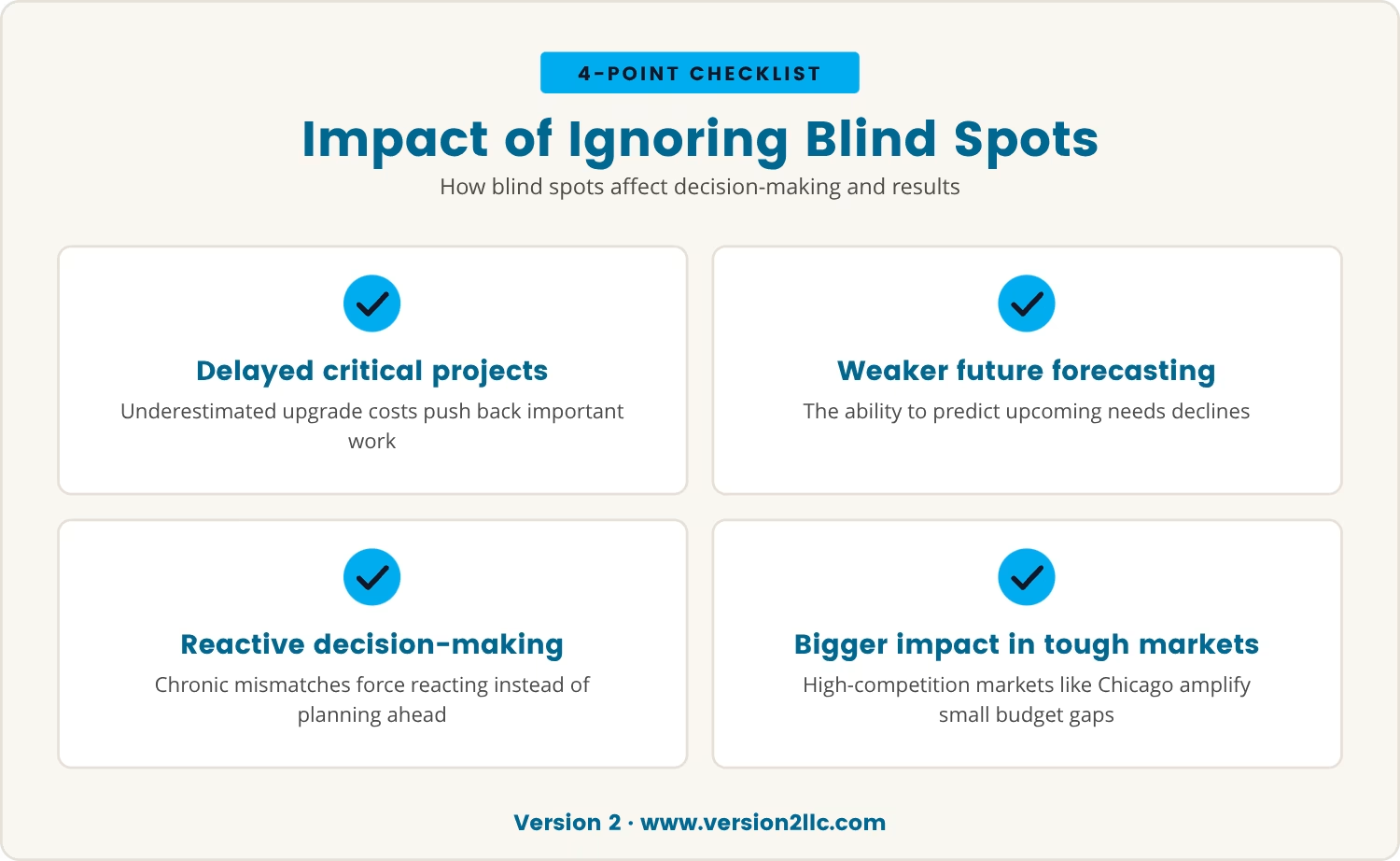
Left unchecked, blind spots stop being just a numbers problem and start shaping decisions across the whole business. Underestimated upgrade costs delay critical projects; missed indirect expenses force last-minute cuts somewhere else entirely.
The knock-on effect is a weaker ability to predict future needs at all. When budget and forecast are chronically out of sync, the business ends up reacting to problems instead of planning ahead of them, and over time that erodes trust between IT and other departments, making collaboration harder just when it's needed most.
In a market like Chicago, where competition and costs both run high, even a small budget gap lands with outsized force. Closing these blind spots isn't only about saving money—it's about building an IT environment reliable and flexible enough to actually support business goals.
No process eliminates every surprise, but a stronger budget process is built by focusing on a few specific areas:
Taken together, these steps shift the process from reactive fixes toward proactive planning, cutting down the risk of repeating the same mistakes.
Modern analytics and forecasting methods catch blind spots before they turn into problems, and the strongest approach usually blends both quantitative and qualitative forecasting rather than leaning on one alone.
Quantitative forecasting draws on historical data and trends, which makes it well suited to tracking recurring expenses or catching spending spikes early. Qualitative forecasting instead leans on expert judgment and scenario planning, which is exactly what surfaces the changes that numbers alone can't predict.
Used together, the two methods produce a clearer picture of the IT environment as a whole, and they let the budget process adjust as new information comes in, sharpening forecast accuracy over time rather than locking it in once a year.
The real value of IT budget forecasting isn't just getting the numbers right for their own sake—it's building a process that adapts, avoids surprises, and holds up as the business grows.
Naming and addressing recurring blind spots is what breaks the cycle of repeating the same mistakes. Instead of re-forecasting every year and hoping for a better outcome, that awareness turns into a cycle of learning and improvement.
That shift carries particular weight for businesses with 10 to 100 employees, where every dollar and every decision has outsized influence on what comes next. Closing the gap here creates room for innovation, stability, and growth instead of constant course correction.

If your business has 10 to 100 employees, you’ve probably felt the frustration of IT budgets that never quite match reality. At Version2, we know how easy it is for the same blind spots to slip through, year after year.
We invite you to see how our approach helps you identify and fix these recurring issues, so your IT spending supports your real business goals.
Try our services risk-free: if you’re not happy in the first three months, we’ll refund your onboarding fee—no questions asked.
Start by reviewing past budget and forecast results to see exactly where they diverged, then use both historical data and team input to spot recurring blind spots. Update assumptions regularly and bring key stakeholders into the process early rather than after the numbers are set.
Capital IT spend covers one-time investments like hardware purchases or major software upgrades, while operational IT spend includes ongoing costs such as subscriptions, support, and maintenance. Keeping the two separate makes it possible to track where money actually goes and plan for what's coming next.
Technology cost benchmarking compares IT spending against industry standards, revealing where a business might be overpaying or underinvesting. It also provides concrete data to support decisions when those numbers need explaining to other stakeholders.
Indirect costs—training, downtime, integration work—add up quickly when they're left out of the budget entirely. Tracking them from the start avoids nasty surprises and keeps the financial plan honest about the true cost of an IT project.
Quantitative forecasting relies on numbers and trends to predict future costs, while qualitative forecasting draws on expert judgment and scenario planning. Combining both produces a more balanced, flexible budget and lowers the odds of hidden issues going unnoticed.
%20(1).png)
September 11, 2026
Learn how IT helpdesk outsourcing can streamline support, reduce costs, and boost customer satisfaction for growing businesses seeking reliable help desk solutions.

August 28, 2026
Explore cloud data integration, its benefits, and top use cases. Learn how integration solutions streamline business data for better decisions and growth.
August 21, 2026
Discover how data backup solutions protect your business from data loss. Learn practical strategies for business data backup and secure recovery in this guide.
