October 23, 2026
IT Budget Forecasting: Why the Same Gaps Keep Costing You
Spotting these blind spots lets you stop repeating the same costly mistakes and finally see results that match your IT plans.


October 30, 2026
Choosing an AI consulting partner over another internal hire is often the difference between a stalled project and real business results. Five specific signs can help you make the right call before resources are wasted.
Most businesses assume AI consulting services are a shortcut for companies that simply don't want to build an internal team. In practice, the harder and more useful question is when outside help actually beats hiring in-house, and the answer isn't as obvious as the assumption suggests.
Plenty of teams try to run AI projects entirely on their own, only to watch momentum stall or the final result fall short of what was promised. The reason is rarely effort. It's that the specific skills, the hands-on experience, or the outside perspective an AI project needs simply aren't sitting in-house yet.
That gap is showing up in the numbers, too: planned use of vendors and consulting providers for AI projects has jumped 129% compared with the previous six months. The jump signals something practical; more companies are running into the limits of what their own teams can handle once an AI project gets complex.
That's precisely where AI consulting services earn their keep, bringing specialized knowledge, hands-on experience, and tested methods that separate a stalled project from one that actually ships. A consulting partner helps a business sidestep the mistakes that sink these efforts and helps make sure the AI investment actually pays off. Recognizing when a consulting partner beats another hire is what saves both time and money.

Sometimes the team on hand just doesn't have the skills a given AI project calls for, and that's no knock on them; AI moves fast and splinters into narrow specialties. A staff that's sharp on IT or data analysis can still hit a wall the moment a project calls for machine learning, natural language processing, or deploying a model into production.
Hiring another employee looks like the obvious fix, but finding someone who has exactly the right expertise is neither quick nor cheap. Even after that search succeeds, the new hire still needs months to learn the business before delivering anything.
An AI consulting company closes that gap on a much faster timeline, bringing a bench of specialists with hands-on experience across a range of AI technologies. That means the right knowledge shows up exactly when it's needed, instead of waiting on a new hire's ramp-up period. Many consultants go a step further, upskilling the existing team along the way so the value outlasts the project itself.
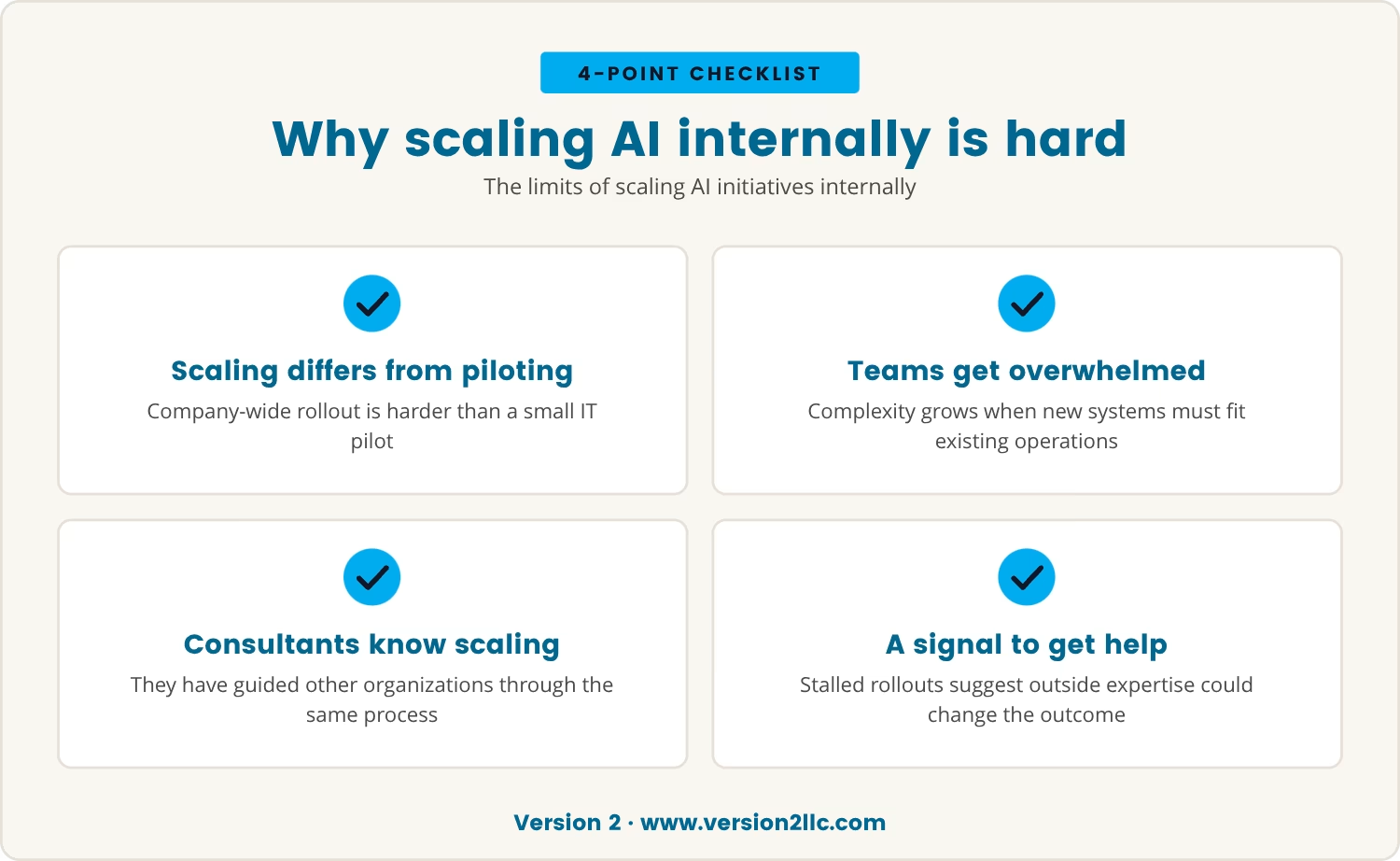
Growth changes the shape of the problem: a small pilot handled by the IT team is one thing, but scaling it into something company-wide is a different challenge entirely, and often a harder one than expected. Internal teams can get buried under the complexity of a larger initiative, particularly when new systems have to mesh with existing business operations.
Consultants, by contrast, have already guided other organizations through that exact scaling process. They know how to build systems that grow alongside the business while sidestepping familiar traps like data silos or security gaps—a concern that carries extra weight for companies in Chicago, where competition and regulatory requirements raise the stakes for getting it right the first time.
Struggling to turn a successful pilot into a company-wide rollout is usually a strong signal that outside help would change the outcome.
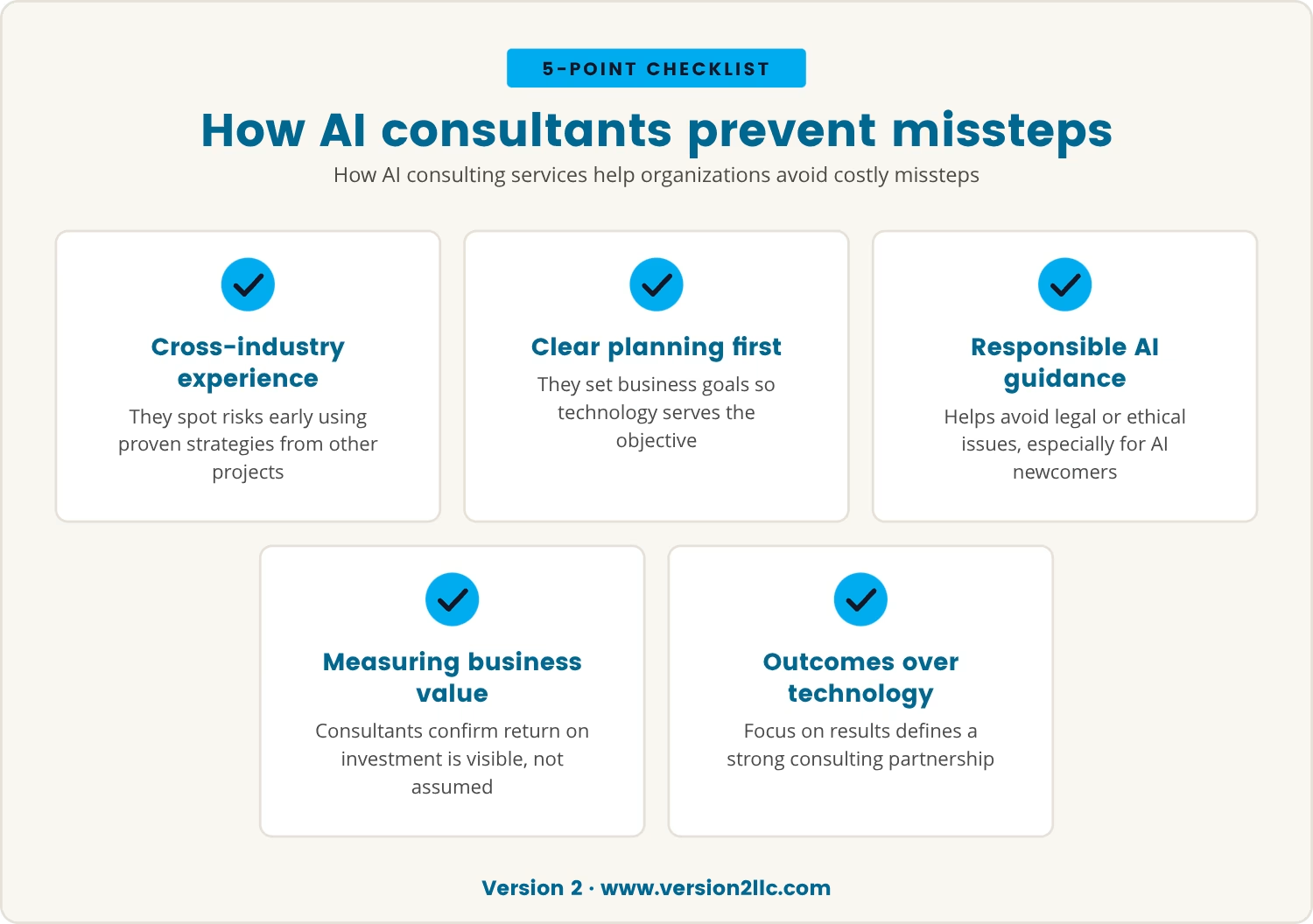
Scaling isn't the only place things go wrong, which is why AI consulting services matter well beyond pure technical know-how; they exist to head off mistakes that can cost a business months or years of ground. Consultants have watched similar projects succeed and fail across many industries, which lets them flag risks early and point toward strategies already proven elsewhere.
That experience shows up first in the planning stage, where consultants help define clear business objectives so the technology serves the goal rather than the other way around. It carries into responsible AI practices as well, steering a business clear of legal or ethical trouble down the line—guidance that matters most for teams new to artificial intelligence or unfamiliar with large-scale AI adoption.
Consultants also help measure the business value a project is actually generating, so the investment's return is visible rather than assumed. That focus on outcomes, rather than technology for its own sake, is what separates a strong consulting partner from a simple new hire.
Knowing when outside help beats another hire isn't always obvious from the inside. These five signs suggest a consulting partner would serve the business better than adding another person to the team:
A strong start that fizzles before the finish line often means the internal team is missing specialized skills or experience needed for the harder parts of the project. Consultants can step in and get the work back on track.
When a team is solid with basic analytics but unsure how to approach generative AI, agentic AI, or other advanced tools, outside experts can bridge that gap and guide the way forward.
If expanding AI initiatives brings confusion, duplicated work, or integration headaches instead of momentum, consultants can help design a scalable strategy that actually fits the business.
When AI projects are hard to tie back to real business value, a consulting partner can set clear objectives and measurable success criteria, keeping the investment tied to core goals.
When legal, regulatory, or ethical questions are stalling implementation, consultants experienced in responsible AI can help navigate those issues and prevent costly mistakes.
Trying to save money by keeping everything in-house can quietly cost more than it saves. A team stretched too thin, or missing the right expertise, tends to take longer, spend more, and fall short of what was promised; wasting resources and letting real opportunities for AI impact slip by.
A failed AI project costs more than the money already spent on it; it costs time, and it costs ground against competitors who are moving faster. Recognizing the limits of an internal team and bringing in consulting help before those limits bite protects the investment already made and positions the business to succeed.
Projects that keep running long past their planned timeline, or a team that keeps struggling to deliver the results promised at the outset, are worth noticing. When that pattern holds, it may be time to consider whether an outside partner could move things forward more effectively.
Picking the right consulting partner takes more than checking for technical skill. Look for a team that understands the industry in question, the business's actual objectives, and the local context in Chicago, since a good partner takes the time to learn the specific challenges at hand before proposing a fix.
Clear communication and practical advice should come standard, alongside a firm focus on measurable business outcomes, prioritizing projects, managing risk, and building internal capability for what comes next. The right partner doesn't just close out the current problem; it lays a foundation for AI adoption and growth that continues afterward.
Choosing between another hire and a consulting partner ultimately comes down to what the business actually needs right now. Stalled projects, an overwhelmed team, or expertise nowhere to be found internally are all signals that a consulting partner can supply the support and direction to move AI initiatives forward.
Catching these signs early prevents two opposite mistakes: overpaying for outside help that isn't really needed, and under-resourcing a project that's likely to stall without it. Getting that balance right saves time, money, and frustration, while letting the business capture what artificial intelligence can actually deliver.
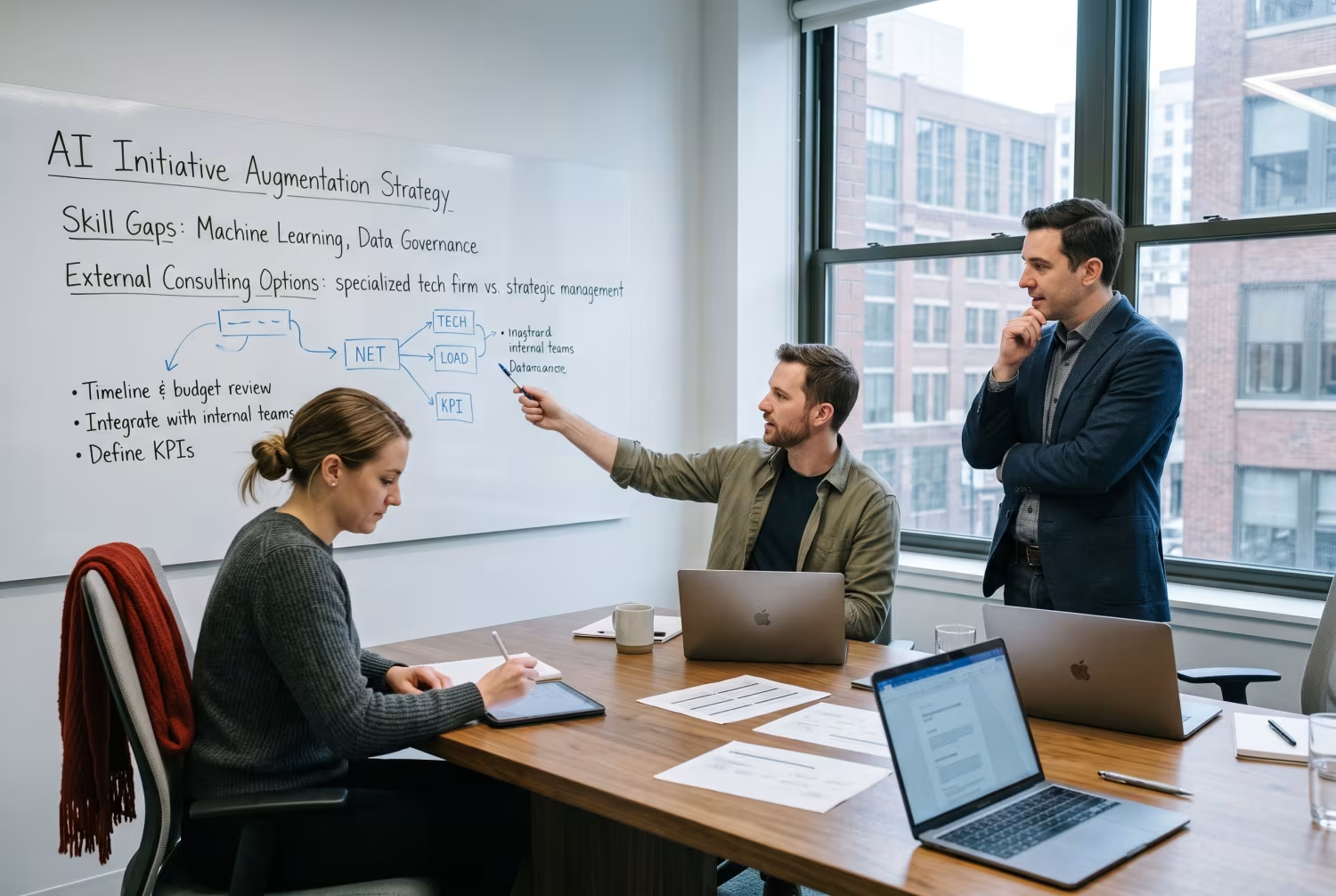
Many businesses with 10 to 100 employees find themselves unsure whether to hire another team member or bring in outside help for their AI projects. At Version 2, we understand how important it is to make the right call for your business and your budget.
If you’re weighing your options, we invite you to see how we approach these decisions and what a conversation about your own setup could look like.
If you’re not satisfied in the first three months, let us know, and we’ll refund your onboarding fee, so you can move forward with confidence.
A clear use case paired with a shortage of technical skill or experience is the exact situation consulting is built for. Consultants can assess existing systems, spot opportunities, and guide the integration of generative AI into day-to-day business operations.
Look for a partner with a strong track record in the relevant industry, proven experience with the specific AI technologies in question, and a clear focus on delivering business value. They should explain complex ideas in plain terms and work closely with the internal team to keep the AI journey on track.
Yes. Experienced consultants can build AI strategies that address compliance, data privacy, and ethical concerns, guiding a business through responsible AI practices that meet relevant laws and industry standards while keeping risk to a minimum.
Consulting brings a team with a spread of skills and experience, offering access to more knowledge than any single hire could provide alone. Consultants identify challenges quickly, recommend proven practices, and offer hands-on support for a defined stretch of time, while an internal specialist typically needs longer to deliver and is bound by the limits of their own individual experience.
A strong consulting partner drives toward concrete outcomes: better efficiency, sharper decision-making, and measurable ROI on AI projects. The focus stays on aligning AI initiatives with actual business goals, so the technology investment turns into a real-world result rather than a shelf-ware experiment.
%20(1).png)
October 23, 2026
Spotting these blind spots lets you stop repeating the same costly mistakes and finally see results that match your IT plans.
October 16, 2026
Businesses that overlook their meeting room network will keep facing dropped calls and frozen screens, no matter how many new video platforms they try.
October 9, 2026
Chasing visible AI projects first can delay the real gains—margin protection and efficiency—that come from automating your back office before customer-facing tools.
