August 14, 2026
Managed IT Services for Small Business: Benefits, Pricing & FAQs
Explore how Managed IT services for small business can reduce downtime, boost security, and streamline operations with expert IT business solutions tailored for growth.


October 9, 2026

Starting with a chatbot or assistant often delays the real benefits of AI. Automating back-office processes first is a faster and more reliable way to protect your margins and drive business value.
Picture a mid-size distributor that spends six months and a sizable budget building a customer-facing chatbot, only to watch the invoices, spreadsheets, and manual approvals behind the scenes keep bleeding hours and money the whole time.
That scenario is common because AI business solutions are usually pitched as the fastest way to modernize operations: launch a chatbot or assistant, the story goes, and results follow almost immediately. The reality rarely matches that pitch.
Companies gravitate toward customer-facing AI first because it's visible and easy to demo, yet visibility doesn't equal speed. These projects tend to take longer to deliver real value than expected, and while attention stays fixed on the front end, the bigger gains sit somewhere less glamorous: the back office, where automating what happens behind the scenes often pays off first.
Put simply, automating back-office workflows with AI can protect your margins faster than launching a flashy chatbot ever will. Once that trade-off is clear, the next question is which projects to prioritize, and why the most visible ones aren't always the most effective. That's what the rest of this article works through.

Businesses in Chicago and beyond are often drawn to AI tools that customers can see, like chatbots and virtual assistants, because these promise quick wins and a better customer experience. Yet chasing what's visible tends to pull focus away from the harder, less photogenic work of improving core business processes.
Starting with a customer-facing AI usually means building integrations, handling edge cases, and training the system to field a wide range of questions, all of which eat up time and resources. While that effort is underway, internal workflows sit untouched, and the actual drivers of efficiency go unaddressed.
The real value of AI shows up when it automates the repetitive, manual tasks in the back office, the quiet processes that drain time and money every day. Addressing those first improves productivity and protects margins before anything customer-facing even launches.
So if a team is spending months polishing a chatbot, it's worth asking: what would change if that effort went into automating invoice processing or supply chain updates instead? Often the answer is a faster return on investment and a sturdier base for whatever AI project comes next.
Launching a new AI assistant is easy to demo and makes a business look current, which is exactly why it's tempting to chase first. That appeal, though, carries hidden costs that can slow progress rather than speed it up.
Customer-facing AI projects demand heavy customization, since every business has its own products, policies, and customer needs, and training a system to handle all that variation takes time. On top of that, the system needs close monitoring to avoid mistakes that could damage the business's reputation.
Meanwhile, these projects pull a team's attention away from more impactful work. While focus stays on perfecting a chatbot, chances to automate billing, reporting, or supply chain management—areas where AI tends to deliver measurable savings—can slip by unnoticed.
Starting with a chatbot can also set expectations that the technology can't meet. When results arrive slower or less impressive than promised, the letdown breeds hesitation about investing in more transformative projects down the road.
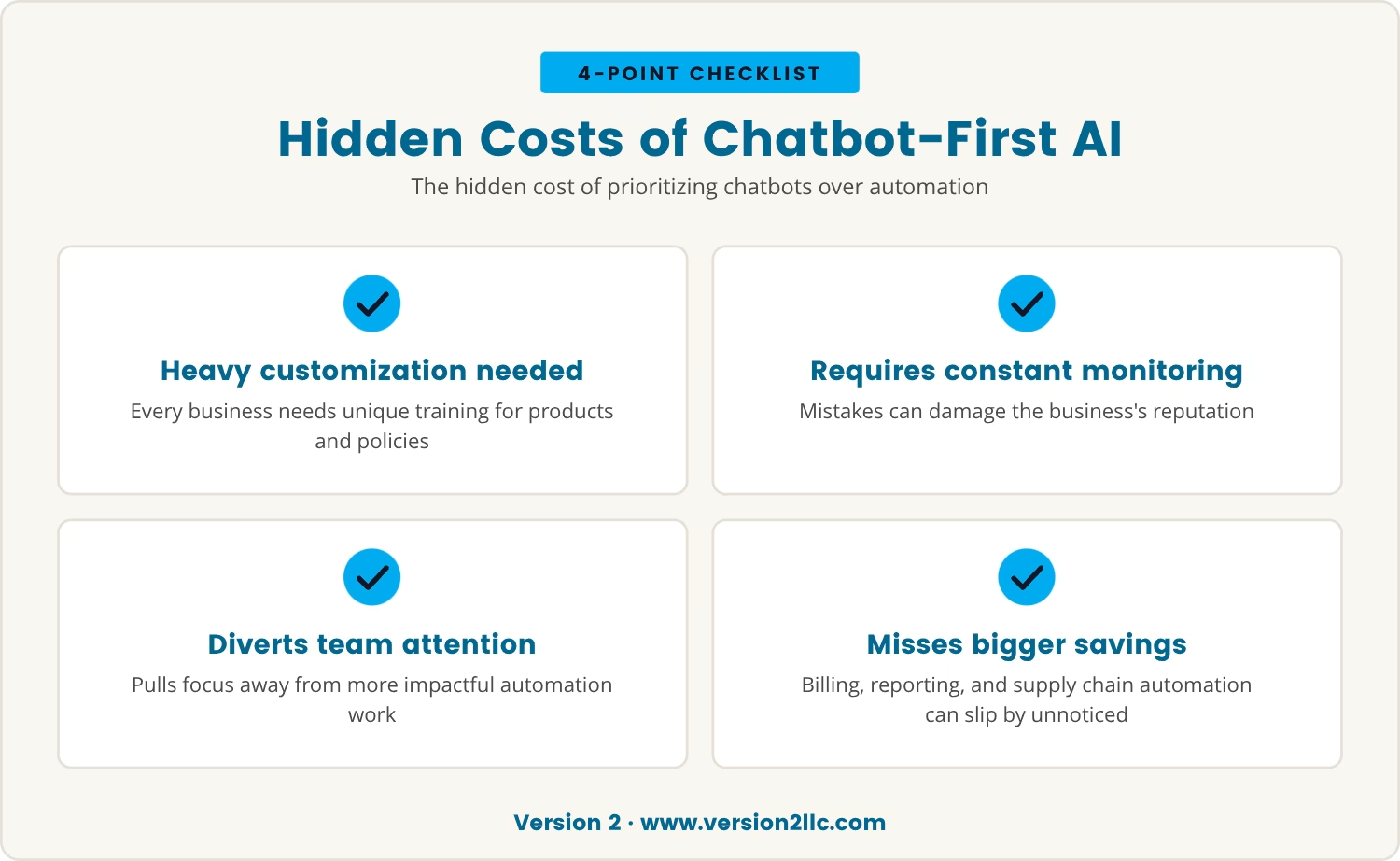
Not all AI business solutions are created equal, and the fastest path to real value usually runs through back-office automation rather than customer-facing tools. A few traits set these solutions apart:
Working through these areas first builds a stable, efficient operation, one that can carry more advanced AI projects down the line.
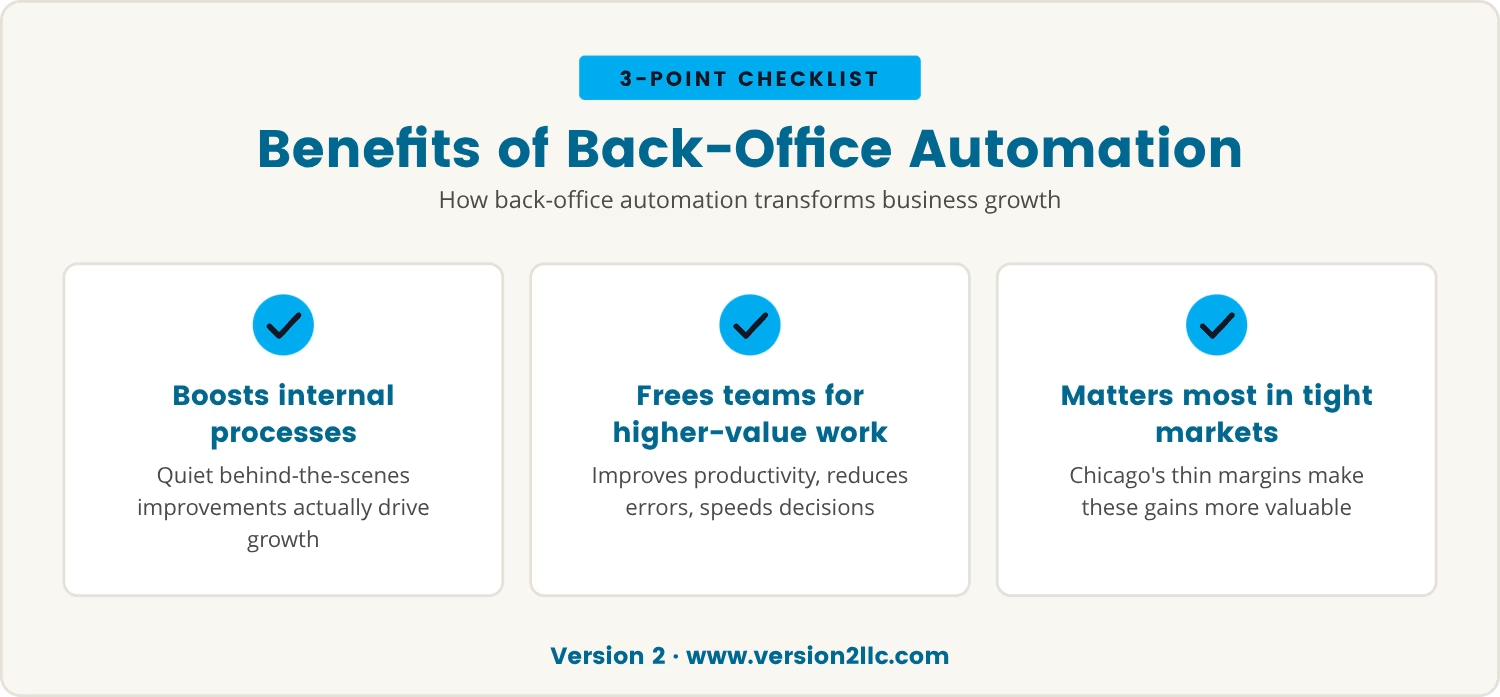
Many companies underestimate the power of automating what happens behind the scenes, and that blind spot has a cost: while customer-facing AI draws the attention, it's the quiet improvements to internal processes that actually drive business growth.
Automating tasks like order processing, scheduling, or compliance checks frees a team to focus on higher-value work, which in turn improves productivity, cuts down on errors, and speeds up decision-making.
That same automation makes scaling easier, too. As the business grows, routine tasks no longer require proportional hiring, so the existing team can turn its attention to strategy and customer relationships instead.
In a market like Chicago, where competition runs tight and margins can be thin, these gains carry real weight. A strong foundation built on AI-powered automation sets a business up for growth that holds over time.
Delivering on the promise of AI comes down to getting the order of operations right. Here's how that sequence typically plays out in businesses that see the fastest results:
Start by mapping out the manual processes that take up the most time or are prone to errors. These are prime candidates for automation.
Choose AI technologies that are proven for the specific use case at hand, such as invoice processing or predictive analytics for inventory.
Roll automation out in stages, testing each step to confirm it delivers the expected results, and refine as you go to sharpen efficiency.
Track the results of automation projects in real time, watching for improvements in speed, accuracy, and cost savings.
Once the back office runs smoothly, customer-facing AI solutions become the next logical step, and with core processes already optimized, they're easier to implement and support.
Choosing a first AI project is a significant decision, and a few considerations help avoid the trap of chasing visibility over value:
Keeping these factors in view makes it far more likely that the chosen AI project delivers value that lasts.
Business leaders are often told that the fastest way to AI value runs through customer-facing tools, but the real lesson is that the order you choose matters more than the technology itself.
Starting with back-office automation builds momentum, protects margins, and lays a foundation for whatever growth comes next. None of this means ignoring chatbots or assistants; it means putting first things first so results show up sooner rather than later.
For any business ready to bring AI into its operations, the smartest path tends to start behind the scenes rather than with the most visible option on the table.

Many businesses with 10 to 100 employees are encouraged to start their AI journey with chatbots, only to find that real value takes longer to arrive. At Version2, we understand how important it is to protect your margins and see results quickly.
If you want to see how our approach to AI automation puts your business goals first, let’s talk about your current setup and where you want to go next.
If you’re not happy in the first three months, we’ll refund your onboarding fee—so you can try automation with confidence.
Automation can handle repetitive tasks like data entry, scheduling, or invoice processing, freeing up a team to focus on higher-value work. This leads to faster turnaround times and fewer errors, helping operations run more smoothly as the business grows.
Launching a chatbot first can delay improvements to core operations, and if the chatbot doesn't deliver quick results, confidence in AI projects overall can suffer. Focusing on internal automation first ensures measurable benefits show up sooner.
Look for tasks that are repetitive, time-consuming, and prone to mistakes. Processes like payroll, inventory management, or compliance checks are often good starting points, since prioritizing them tends to deliver the fastest return on investment.
Many AI tools for small business are designed to be cost-effective and user-friendly. Cloud-based solutions often require minimal setup and can integrate with existing systems, making it easier to get started without high upfront costs.
Yes, AI-powered analytics can process large datasets quickly, providing real-time insights and more accurate forecasts. This helps business leaders make informed decisions and respond to market changes more effectively.
%20(1).png)
August 14, 2026
Explore how Managed IT services for small business can reduce downtime, boost security, and streamline operations with expert IT business solutions tailored for growth.

August 7, 2026
Explore cloud migration solutions, key strategies, and tools to help your business migrate seamlessly. Learn how to avoid common mistakes and ensure a smooth transition.

July 29, 2026
Learn the five warning signs that your architecture or engineering firm needs a stronger technology strategy to support its continued growth.
